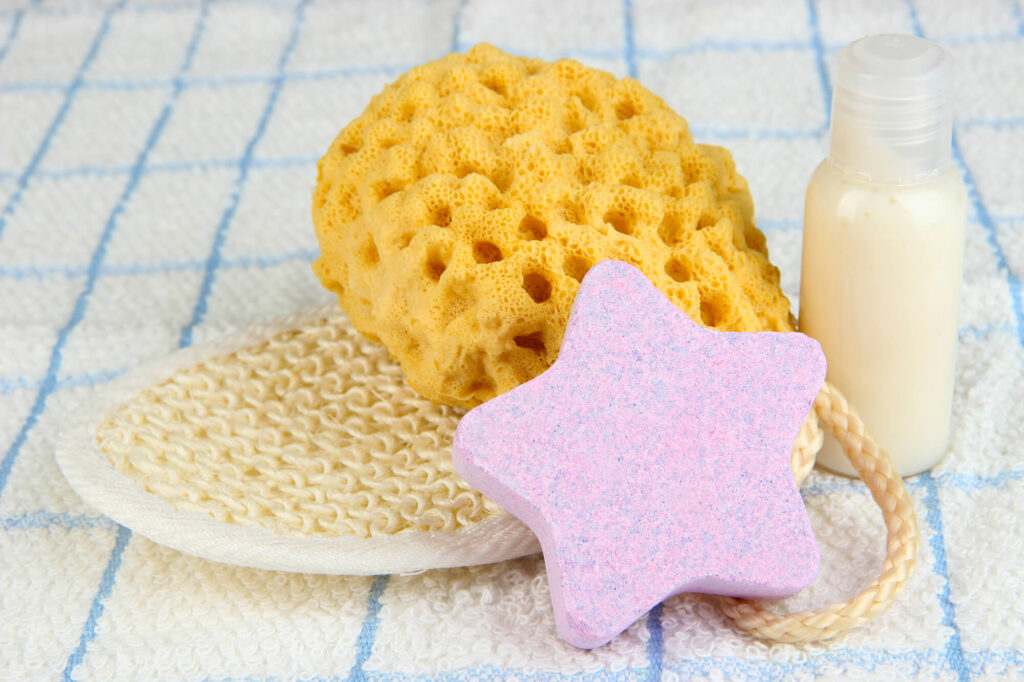


Hay hábitos que repetimos desde siempre sin cuestionarlos, como el lavarnos la cara varias veces al día, o usar esponja o fibra al bañarnos. Muchas personas sienten que si no hay espuma abundante y fricción, “no quedaron realmente limpias”. Pero ¿es verdad que necesitamos estos accesorios para una buena higiene?
La respuesta corta es: no es estrictamente necesario. Puedes limpiar tu piel perfectamente usando solo tus manos y un jabón suave. Sin embargo, cuando se utilizan correctamente, la esponja o la fibra pueden aportar beneficios adicionales sin irritar.
La clave está en cómo las usas, en pequeños hábitos que valen más que mil productos.
¿Se puede uno bañar solo con las manos?
Sí. Tus manos son suficientes para distribuir el jabón, remover sudor, grasa e impurezas del día. De hecho, para muchas personas con piel sensible, esta puede ser la opción más amable.
Lo importante no es el accesorio, sino el producto que utilizas y la suavidad de tus movimientos. Un jabón corporal equilibrado, que limpie sin resecar, cumple su función incluso sin fricción extra.
Beneficios de usar esponja
Las esponjas ayudan principalmente en tres aspectos:
- Exfoliación suave. Al pasarla con movimientos circulares, se eliminan células muertas de forma ligera, dejando la piel con sensación más lisa.
- Mejor distribución del jabón. Generan más espuma y permiten una aplicación más uniforme en todo el cuerpo.
- Sensación de masaje. Estimulan la circulación superficial, lo que puede aportar una sensación agradable durante la ducha.
Si eliges una esponja natural como la luffa, además de generar buena espuma, es biodegradable y más amigable con el medio ambiente.
Eso sí: debe ser suave. Si raspa o arde, no es la adecuada.
Beneficios de la fibra vegetal (manopla de sisal o luffa)
La fibra vegetal suele ofrecer una exfoliación más intensa en uno de sus lados y más suave en el otro. Es ideal para quienes buscan una renovación ligera en zonas como piernas o brazos.
Sus ventajas principales son:
- Exfoliación más profunda sin resecar si se humedece bien.
- Material natural y más transpirable.
- Fácil de colgar y secar después de usar.
La regla más importante es humedecerla completamente antes de usarla. En seco puede resultar demasiado áspera.
Riesgos comunes (cuando no se usan correctamente).
El problema no es la esponja o la fibra en sí, sino el mal uso.
Retención de humedad. Ambas pueden acumular agua, restos de jabón y células muertas. Si no se secan bien, se convierten en un ambiente ideal para bacterias.
Fricción excesiva. Frotar con fuerza no significa limpiar mejor. Al contrario, puede provocar microabrasiones y eliminar aceites naturales necesarios para la protección de la piel.
Material sintético muy áspero. Algunas fibras sintéticas poco transpirables pueden irritar más fácilmente.
La piel no necesita ser “tallada”. Necesita ser cuidada.
Entonces, ¿cuál es la mejor forma de limpiar tu piel sin irritarla?
Aquí van recomendaciones prácticas y sencillas:
- Humedece completamente la esponja o fibra antes de aplicar jabón.
- Usa movimientos circulares suaves, sin presionar.
- No exfolies todos los días; alterna con duchas usando solo las manos 2 o 3 veces por semana.
- Enjuaga muy bien el accesorio y exprímelo.
- Cuélgalo fuera de la humedad para que se seque al aire.
- Desinféctalo semanalmente con vinagre o una solución diluida.
- Reemplázalo cada 1–2 meses si notas desgaste.
Después del baño, aplica crema hidratante para mantener el equilibrio natural de tu piel.
Y, sobre todo, elige un jabón que limpie sin resecar. En Naturalis creemos que el baño no es solo higiene: es un momento personal, de sentir la renovación que tu piel está viviendo en ese momento, y hacerlo con todo el amor y cuidado necesario. Un aroma que acompaña, una pausa breve en el día.
La limpieza no debe sentirse agresiva, sino reconfortante. Porque cuidar tu piel no es cuestión de fricción, sino de equilibrio. Conoce más sobre Naturalis, y encuentra el aroma ideal para tu cuerpo.